


News & Information
What Are the Differences Between High-Purity Thiourea and Standard Industrial-Grade Thiourea?
Thiourea is a commonly used organic sulfur compound in the chemical industry. With its complexing, reducing, and catalytic properties, it is widely used in metallurgy, electroplating, fine chemicals, pharmaceutical synthesis, and other fields. Many procurement and production personnel confuse standard industrial-grade thiourea with high-purity thiourea, assuming that they differ only in name and offer similar performance. In fact, the two grades differ significantly in purity specifications, impurity control, production processes, applications, and usage stability. Using the wrong grade can directly affect product quality and may even lead to production line losses and material scrap.
Their core purity and impurity specifications differ considerably. Standard industrial-grade thiourea generally has an assay of around 99.0%. Limits for impurities such as moisture, ash, and metal ions are less stringent, and normal trace residues are permitted, as long as the product meets basic industrial production standards. High-purity thiourea undergoes deep purification and refining, achieving an assay of 99.8% or higher. Its moisture and ash contents are greatly reduced, while heavy metal ions such as iron, copper, and nickel, as well as anionic impurities such as chloride and sulfate, are strictly controlled. Impurity levels are brought down to the ppm range, making it far purer than industrial-grade products.
The two products are also manufactured to completely different process standards. Standard industrial-grade thiourea is produced using conventional synthesis, crystallization, and filtration processes. These processes are simple, support high output, and keep costs relatively low, making the product suitable for large-volume, general industrial production. High-purity thiourea, by contrast, undergoes further processing from an industrial-grade crude product using techniques such as recrystallization, ion exchange, and fine filtration. Production conditions and process parameters are strictly controlled throughout to remove trace impurities. This requires higher production standards and more stringent quality control, resulting in higher overall production costs.
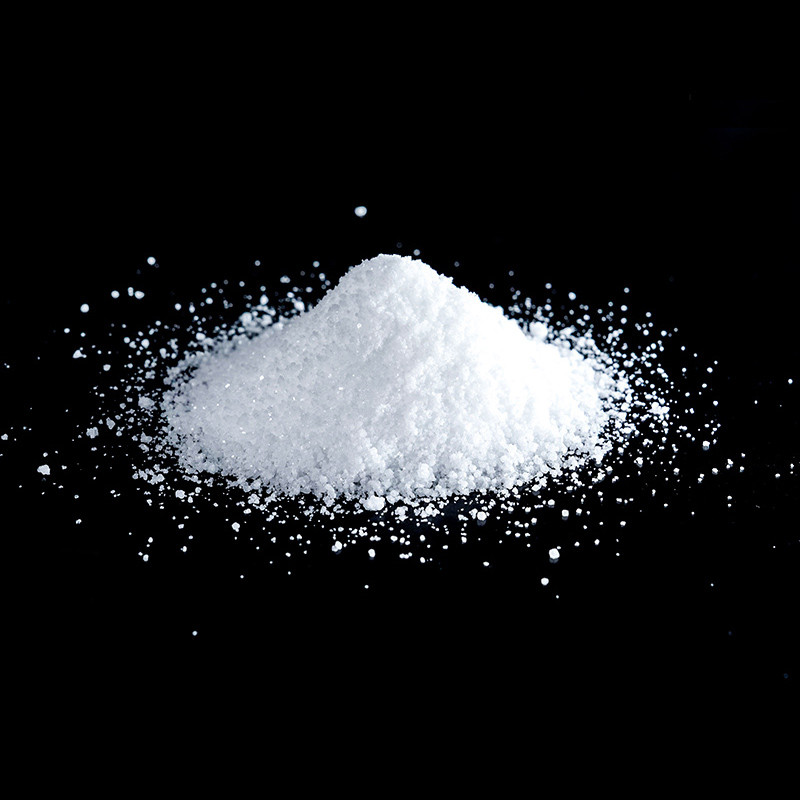
Application requirements are key to selecting the right grade. Standard industrial-grade thiourea is mainly used in basic industrial applications with lower requirements, such as mineral processing, basic fertilizer production, general-purpose industrial additive formulations, and conventional electroplating. These applications are not highly sensitive to impurities, which do not affect basic production outcomes. High-purity thiourea is intended for specialized applications, including the synthesis of pharmaceutical and agrochemical intermediates, fine electroplating brighteners, new electronic materials, fine chemical catalysis, and laboratory research and analysis. These fields are sensitive to impurities; even trace metal residues can cause color variation in finished products, reduce performance, or prevent products from meeting purity specifications.
The two grades also differ noticeably in usage stability and storage performance. Standard industrial-grade thiourea contains more impurities and is less stable. During long-term storage, it may undergo slight moisture absorption and oxidation, and its reactivity may fluctuate considerably, resulting in inconsistent processing performance. High-purity thiourea contains fewer impurities and has a more uniform composition and excellent chemical stability. Its reactions are highly controllable, and it is less prone to deterioration, making it suitable for continuous industrial production requiring high precision and stability.
In summary, high-purity thiourea is not simply an upgraded version of standard industrial-grade thiourea; it is a specialized raw material for fine chemical applications. When selecting a grade for production, companies should avoid using one grade indiscriminately and choose based on the required process precision and product quality. This helps prevent lower-grade materials from compromising finished product quality and avoids unnecessary costs from using high-purity materials where they are not needed, supporting both safe production and reduced consumption.
Other News
- Key Points for the Storage and Transportation of 2,2′-Azobis(2-methylbutyronitrile)
- What Are the Differences Between High-Purity Thiourea and Standard Industrial-Grade Thiourea?
- Beware of Safety Risks! Precautions for Storing Calcium Hypochlorite
- Don't Confuse Them! What Is Calcium Hypochlorite?
- Sodium Hydroxide (Caustic Soda) Safety Guide
- Caustic Soda ≠ All-Purpose Cleaner! Learn About the True Properties of Sodium Hydroxide